Low Methane Yield
The digester produces gas, but less than the feedstock should support. Slow methanogenesis and incomplete conversion leave energy in the effluent.
Valorize identifies the right additive strategy for each digester, runs a structured trial, and measures the result.
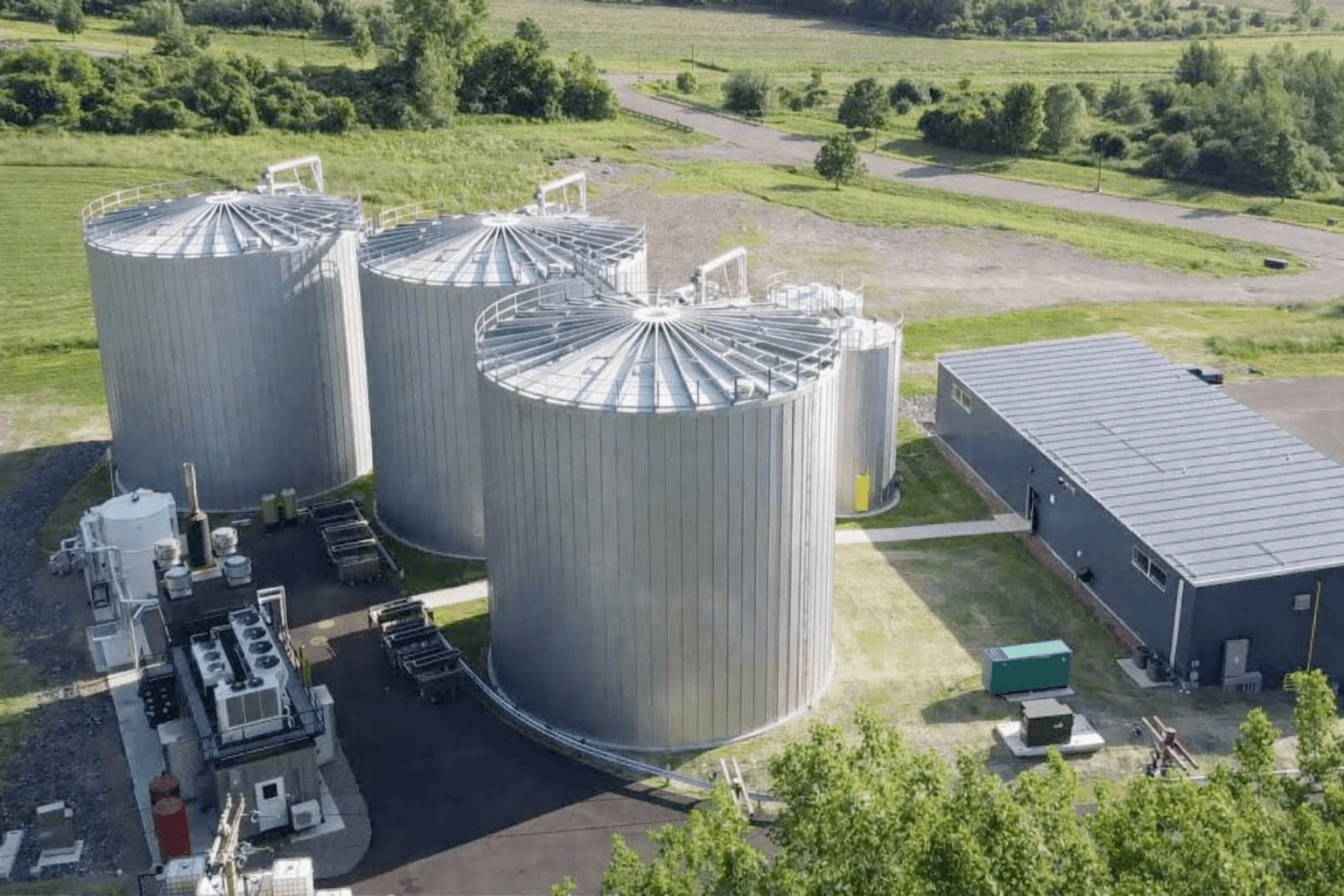
The digester produces gas, but less than the feedstock should support. Slow methanogenesis and incomplete conversion leave energy in the effluent.
pH swings, VFA buildup, foaming, ammonia inhibition. Variable feedstock makes it worse. Every upset costs downtime and revenue.
Hydrogen sulfide corrodes equipment, limits upgrading options, and creates compliance issues. High-nitrogen feedstocks make it harder to manage.
Standard digestate is hard to differentiate. Without added carbon stability or nutrient retention, it competes on price alone.
Biochar is the most studied additive for improving digester performance. It works across digester types and feedstocks because it acts at the microbial level.
Biochar’s conductive carbon matrix enables direct electron transfer between syntrophic bacteria and methanogens, bypassing the slower hydrogen-mediated pathway and accelerating methane production.
High surface area (250–400 m²/g) provides attachment sites for biofilm formation. Immobilized microbial communities are more resilient to process upsets and maintain higher activity.
Biochar adsorbs ammonia, hydrogen sulfide, and volatile fatty acids that would otherwise inhibit methanogenesis. Particularly valuable for high-nitrogen feedstocks like poultry litter or food waste.
Biochar’s alkaline nature and cation exchange capacity help buffer pH fluctuations, maintaining optimal conditions for methanogenic archaea even with variable feedstock inputs.
Start with a measured trial, then scale procurement using validated performance data.
Digester type, feedstock, volume, current methane yield, and the main challenge to solve.
Valorize specifies the biochar, dose rate, and a performance trigger based on baseline data. Success criteria are defined before anything enters the reactor.
Biochar goes into a defined portion of the system. Methane yield and stability are tracked against existing operational data. No equipment changes.
Valorize delivers a performance report against the agreed success criteria. The operator uses the measured results to decide whether and how to scale deployment.
Biochar exits the digester in the digestate, adding measurable agronomic value. Biochar-enhanced digestate commands premium pricing from farms and landscapers.
Biochar increases moisture retention, improving value for drought-prone applications.
Reduced N, P, K leaching means more plant-available nutrients per ton.
Biochar adsorbs ammonia during storage, preserving nitrogen value.
Adsorption of volatile compounds makes handling and application easier.
Carbon addition improves soil aggregation and long-term fertility.
Stable carbon in digestate qualifies for carbon removal documentation.
Valorize supports digestate differentiation programs by documenting agronomic benefits, verifying carbon stability, and connecting operators to premium buyers.
Ammonia adsorption and pH buffering for manure-based systems with variable feedstock.
Better stability for high-variability feedstocks. Buffers against upsets from changing inputs.
Biochar adsorbs ammonia and enables higher nitrogen loading rates.
Higher methane yields and better gas quality for LCFS and RIN markets.
Biochar creates a premium product with documented agronomic benefits.
pH swings, foaming, or inhibition. Biochar improves operational consistency.
Biochar's impact on AD performance has been validated across lab, pilot, and commercial-scale operations.
5-25%
AVERAGE METHANE GAIN
Meta-analysis range
76
PEER-REVIEWED STUDIES
Chiappero et al., 2022
>90%
PURITY ACHIEVED
Argonne National Lab
Chiappero et al., Renewable & Sustainable Energy Reviews (2022)
Systematic review of 76 studies comprising 408 individual experiments on biochar addition to anaerobic digesters across multiple feedstock types and operating conditions.
Argonne National Laboratory
Research demonstrating biochar's ability to improve biogas quality directly from the digester, reducing downstream upgrading requirements.
Peter et al., ACS Omega (2025)
Recent study on optimized biochar formulations showing significant improvements in biogas yield under controlled conditions.
Field trials on working dairy digesters in Pennsylvania, testing biochar under real-world operating conditions with variable feedstock inputs.
Schedule a 30-minute consultation. Valorize will review the system, recommend an additive strategy, and design a trial with a defined baseline, success criteria, and measurement plan.