Biochar in Anaerobic Digestion: Mechanisms, Evidence, and Economics
Most anaerobic digestion facilities are operating below their methane yield potential.
By Tristan Springer, Co-Founder and CEO at Valorize
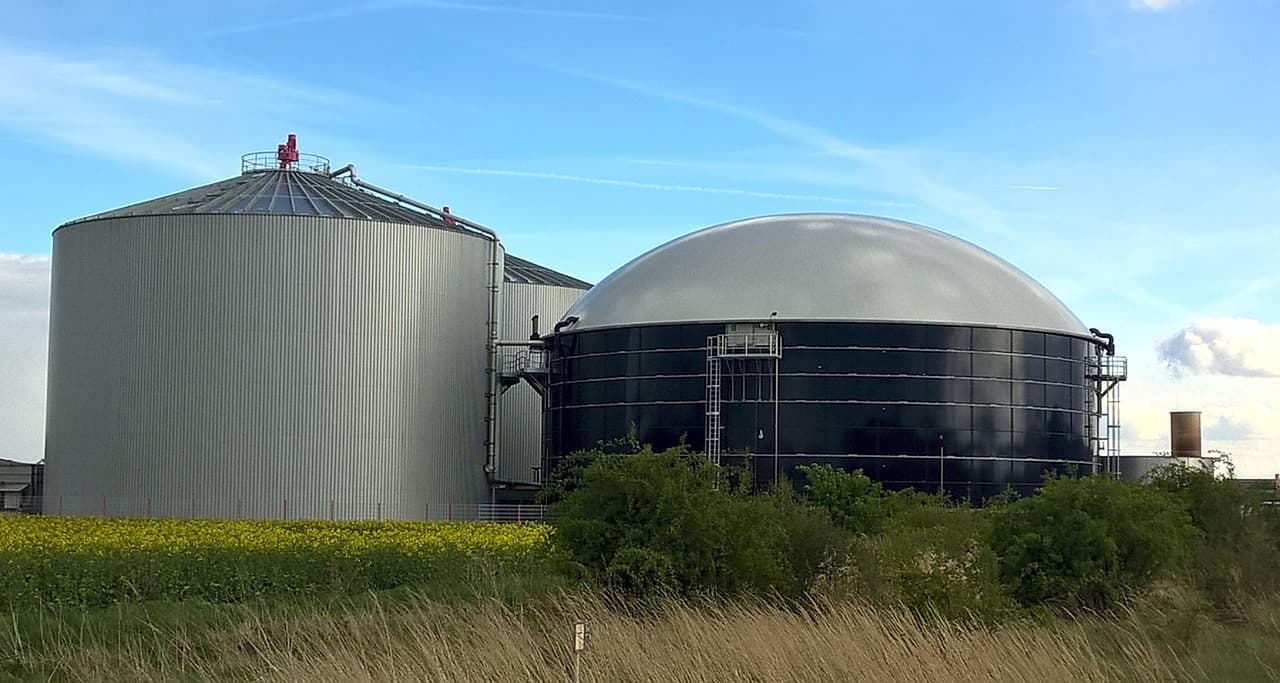
A growing body of evidence suggests that biochar added at 1–3% of volatile solids can increase methane production by 10–20%, reduce process upsets, and improve digestate quality.
For a 1 MW renewable natural gas (RNG) facility, this can translate to $100,000–$300,000 in additional annual revenue with minimal capital investment.
This article reviews the mechanisms behind these improvements, examines the peer-reviewed evidence, and outlines when biochar makes economic sense for anaerobic digestion operators.
Biochar as a functional reactor additive
Biochar is a carbon-rich solid produced through the pyrolysis of biomass under limited oxygen. While most commonly discussed as a soil amendment or carbon removal pathway, it also functions as a reactor additive in anaerobic digesters.
When added to digesters, biochar interacts directly with microbial communities and process chemistry. This distinguishes it from conventional additives like trace metals or buffering agents, which primarily address specific chemical imbalances.
When operators should consider biochar
Biochar is particularly attractive for RNG facilities selling into LCFS or RIN markets, where incremental gas yield directly impacts revenue. It shows strong performance in high-nitrogen manure digesters where ammonia inhibition limits performance, and in food waste and rendering operations where feedstock variability causes instability. Systems experiencing pH swings or foaming can benefit from improved process stability, while operators selling digestate as a product can leverage the enhanced agronomic quality to command premium pricing.
If your facility experiences chronic variability, inhibition, or is operating below nameplate capacity, biochar trials warrant consideration.
Mechanisms of performance improvement
Direct interspecies electron transfer (DIET)
One of the most important mechanisms is direct interspecies electron transfer. In conventional anaerobic digestion, syntrophic bacteria and methanogens exchange electrons indirectly via hydrogen or formate. This pathway is relatively slow and sensitive to environmental conditions.
Conductive biochars enable direct electron flow between microbial species, bypassing the hydrogen-mediated pathway and accelerating methanogenesis. Multiple studies show that conductive carbon materials, including biochar, activated carbon, and magnetite, significantly enhance methane production through DIET-mediated pathways.
Microbial habitat and biofilm formation
Biochar typically exhibits surface areas between 200 and 400 m² per gram, providing extensive attachment sites for microbial biofilms. Immobilized microbial communities are more resistant to process shocks, maintain higher metabolic activity, and improve overall digester resilience.
This effect is particularly valuable in systems with variable feedstocks such as food waste, rendering byproducts, or high-fat industrial streams.
Adsorption of inhibitors
Biochar adsorbs several compounds known to inhibit anaerobic digestion, including ammonia, hydrogen sulfide, volatile fatty acids, and phenolic compounds. This makes biochar especially useful for high-nitrogen feedstocks such as poultry litter, manure, digestate recirculation, and protein-rich food waste.
pH buffering and cation exchange
Many biochars are mildly alkaline and exhibit significant cation exchange capacity. This helps buffer pH swings and stabilize reactor chemistry, particularly during organic loading rate increases or feedstock transitions.
What the research shows
Meta-analysis evidence
The most comprehensive review to date is the meta-analysis by Chiappero et al. (2022) published in Renewable and Sustainable Energy Reviews. The authors analyzed 76 peer-reviewed studies comprising 408 individual experimental cases across multiple feedstocks and digester types.
The central finding was that biochar addition resulted in consistent methane yield improvements ranging from 5 to 25 percent, with some systems showing higher gains under optimized conditions.
Laboratory and pilot studies
A 2025 study by Peter et al. in ACS Omega investigated optimized biochar formulations and reported up to a 95 percent increase in biogas yield under controlled conditions. The study found a strong correlation between biochar electrical conductivity and methane enhancement.
Field and commercial trials
Field validation is increasingly emerging. Penn State Extension documented on-farm dairy digester trials in 2024 showing improved methane production and operational stability under real-world operating conditions.
Argonne National Laboratory has also demonstrated that biochar-amended digesters can achieve greater than 90 percent methane concentration directly from the digester, reducing downstream biogas upgrading requirements.
These results suggest that the effects observed in laboratory systems can translate to commercial-scale operations.
Practical implementation
Typical dosing rates
Reported dosing rates vary depending on feedstock and system design. Most studies fall within the range of 0.5 to 3 percent of volatile solids input, or approximately 1 to 10 grams of biochar per liter of digester volume.
Operators typically begin with bench-scale testing and gradually increase dosage while monitoring gas yield and stability.
Where to dose biochar
Common integration points include inline dosing with feedstock slurry, addition to mixing or equalization tanks, direct dosing into primary digesters, and upstream dosing in manure lagoons. Biochar does not require new equipment and can generally be introduced using existing solids handling systems.
What type of biochar works best
Not all biochars perform equally in anaerobic digestion. High-performing biochars typically exhibit high electrical conductivity, surface area above 200 m² per gram, low ash content, moderate alkalinity, and woody or lignocellulosic feedstocks.
Low-temperature chars, manure-derived chars, or high-ash materials generally show weaker performance. This highlights the importance of specification and sourcing. Biochar optimized for AD is not the same product as soil biochar or metallurgical biocarbon.
Economic considerations
The economics of biochar in anaerobic digestion depend on three primary value streams: increased biogas revenue, reduced operating costs, and enhanced digestate value.
Increased biogas and RNG revenue
A 10 to 20 percent increase in methane yield can materially impact project economics. For example, in a one-megawatt RNG facility selling gas at 15 dollars per MMBtu, a 15 percent methane uplift can translate into roughly 100,000 to 300,000 dollars per year in additional revenue, depending on utilization and market conditions.
Reduced operating costs and downtime
Biochar can reduce foaming incidents, process upsets, hydrogen sulfide scrubbing requirements, and chemical additive usage. These savings are often harder to quantify than gas revenue but can be operationally meaningful, especially for systems with chronic stability issues.
Enhanced digestate value
Biochar exits the system in digestate, creating a biochar-enriched fertilizer with higher water retention, improved nutrient retention, lower ammonia losses, and reduced odor. This can enable operators to sell digestate at a premium or improve agronomic performance on owned farmland.
Biochar and carbon economics
Biochar is unusual in that it simultaneously improves operational performance and generates climate value. When used in digesters, biochar sequesters stable carbon, increases renewable energy output, reduces methane slip, and improves nutrient cycling.
From a climate perspective, this creates a stacked impact profile that combines carbon removal with emissions reduction and productivity gains. Few technologies offer such strong alignment between operational and climate incentives.
Conclusion
The evidence is increasingly clear that biochar is not only a soil amendment or carbon removal pathway, but also a functional process additive for anaerobic digestion. The scientific literature supports its ability to increase methane yields, stabilize operations, and enhance digestate quality.
For AD operators, biochar represents a rare opportunity to improve performance, increase revenue, and generate additional climate value with minimal capital investment. As RNG markets grow and performance expectations rise, biochar is likely to become a standard tool in the anaerobic digestion toolkit.
Valorize works with RNG developers and digester operators to source high-performance biochar, design dosing protocols, and quantify performance improvements across commercial systems.
References
Chiappero, M., Norouzi, O., Hu, Z., & Kopinke, F. D. (2022). Biochar-assisted anaerobic digestion: A systematic review and meta-analysis. Renewable and Sustainable Energy Reviews, 166, 112620.
Peter, S., Zhang, Y., Li, H., & Wang, J. (2025). High-performance biochar formulations for enhanced biogas production. ACS Omega, 10(4), 3892–3903.
Penn State Extension. (2024). On-farm evaluation of biochar as an additive in dairy anaerobic digesters. Pennsylvania State University Extension Service.
Argonne National Laboratory. (2021). Conductive carbon materials for enhanced biogas quality in anaerobic digestion systems. U.S. Department of Energy.
Rotaru, A. E., Shrestha, P. M., Liu, F., et al. (2014). Direct interspecies electron transfer between Geobacter metallireducens and Methanosarcina barkeri. Applied and Environmental Microbiology, 80(15), 4599–4605.
Lovley, D. R. (2017). Syntrophy goes electric: Direct interspecies electron transfer. Annual Review of Microbiology, 71, 643–664.
Omondi, M. O., Xia, X., Nahayo, A., Liu, X., Korai, P. K., & Pan, G. (2016). Quantification of biochar effects on soil hydrological properties using meta-analysis of literature data. Geoderma, 274, 28–34.